What broke
Agent-drafted posts didn't sound like me
Responsibility
Decision
Personal Project / AI Work System
Memory loaded per session
Read at session start vs. everything stored
The system helps with all six, and it stayed easy to manage.
I built it in Claude Code and have used it every day for six months.
Every AI session started from zero: I opened a chat, explained what I needed, and copied results between chats, or designed without AI at all.
Building one system with shared memory gave every session a base to start from. But as it grew, managing its context started competing with the work, which meant:
Context should serve the work, not compete with it.
The problems I met in daily use shaped three boundaries: responsibility, memory, and maintenance.
Agent-drafted posts didn't sound like me
Every session loaded everything and ran out mid-work
Cleanup ran every two weeks, but growth happened every session
Routine work runs on its own, but decisions don't.
Each session gets only the context its task needs, so a writing session doesn't carry my job-search context. Replaced rules are archived, not deleted.
The system has to notice when it starts getting in the way. It flags its own drift in a weekly review rather than every morning, and I decide what to act on.
I decide, direct, and approve across six kinds of work. They share one system: research feeds memory, memory feeds the dashboard, and maintenance keeps it usable. The dashboard is where I see what needs me and decide.
SHARED SYSTEM
User sees and decides
3Maintenance keeps it usable
All three choices keep me in the loop, but each costs something.
A cleanup every two weeks and a health check were supposed to keep the memory loaded into every session small, but they didn't.
The code wasn't broken. The model was. The system kept growing. Session load went up, then came down.
Memory grew 51% after cleanup.
One file accounted for 43% of loaded memory. The health check counted lines, while the real constraint was size.
The monitoring model was measuring the wrong thing.
Measure actual size. Archive earlier. Cap entry length.
−58% file size · −25% fixed session cost
Before the dashboard, knowing what needed me meant searching for the right references every time. So I organized it around the decisions I have to make: judgment first, action second, retrieval third, and system maintenance last.
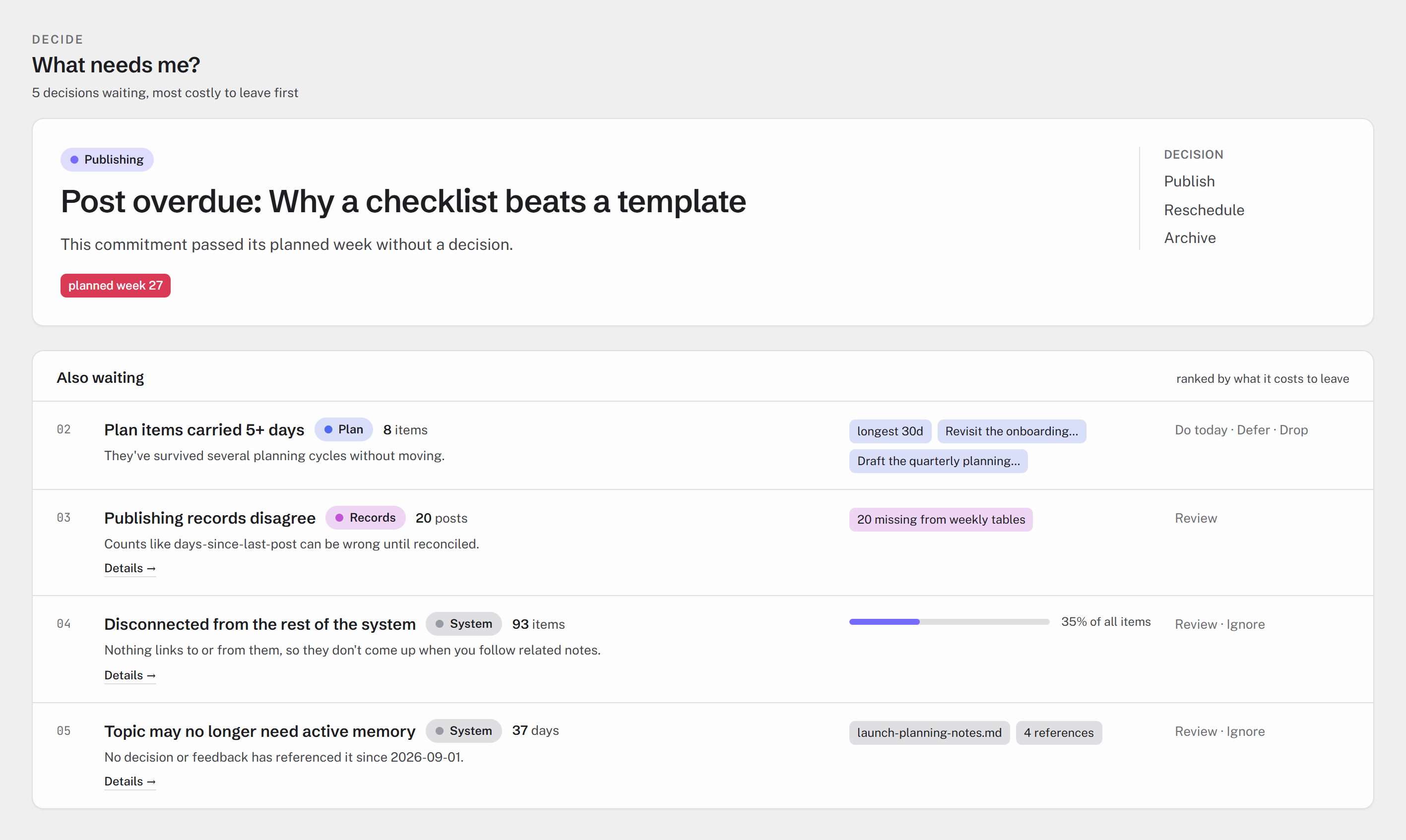
Decide
What needs me comes first, ranked by what it costs to leave: a post past its date, a stuck plan, records that make the numbers wrong, then maintenance. Each decision shows why it matters, the evidence, and its options, but nothing on the dashboard acts on its own.
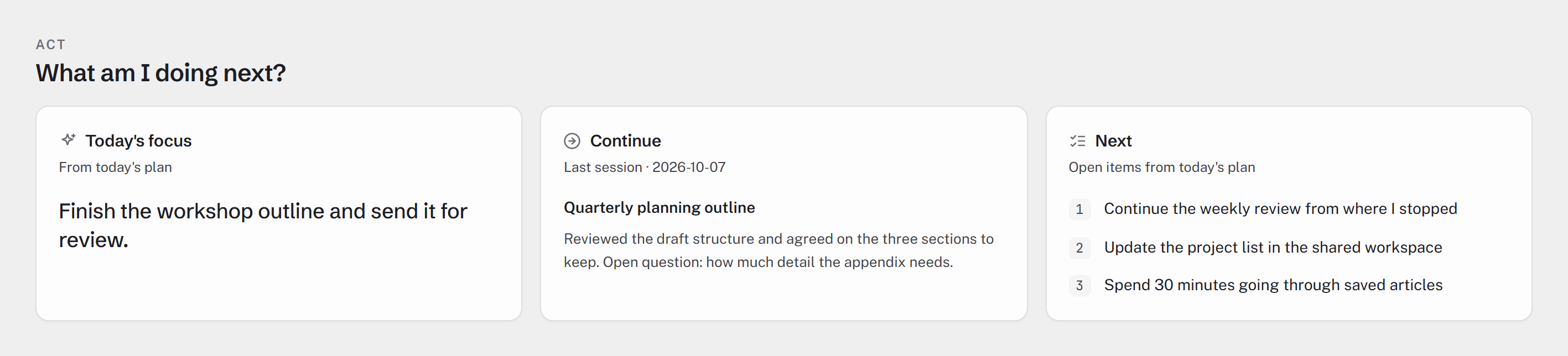
Act
Below it, what I can move forward today, without repeating what's already waiting above.
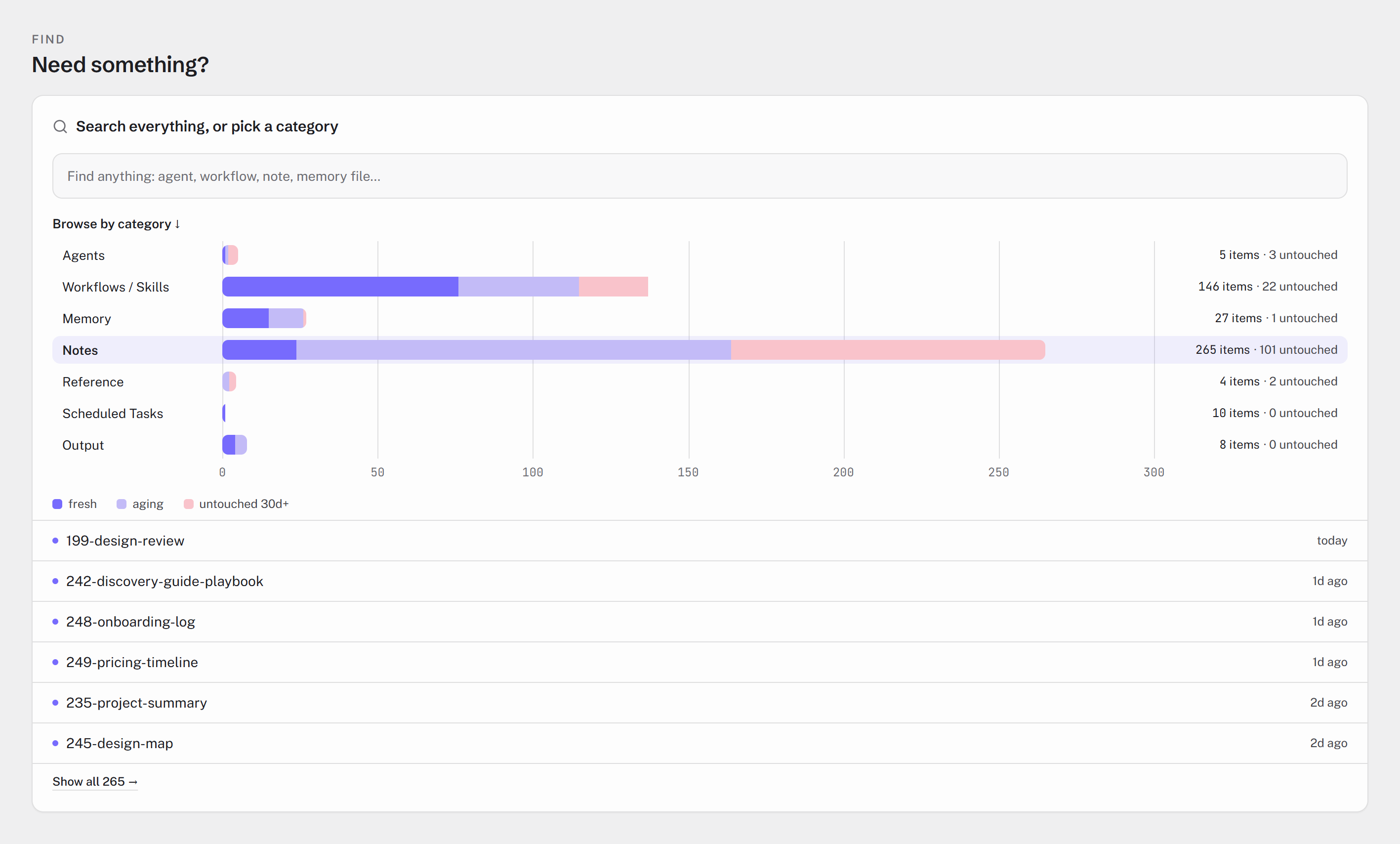
Find
Finding stays separate from deciding. When I need something, I search or pick a category, and each bar shows how much of it is fresh, aging, or untouched for 30 days.
System check
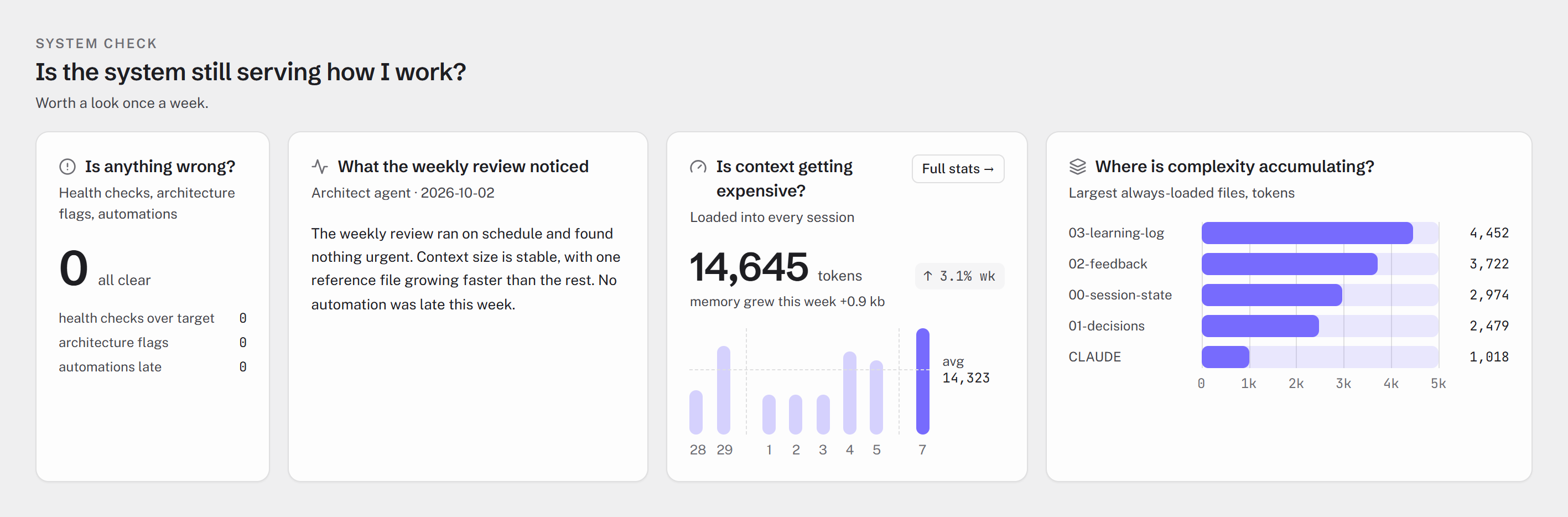
System health sits last on the page because it matters once a week, not every morning. The weekly check shows what's wrong, what the review noticed, and whether context and complexity are growing. When there's nothing to act on, it stays quiet.
Full stats
All the information stays, one level deeper. When context cost or memory grows, I can see what each session pays for, where the bulk lives, and whether cleanup keeps up.
Connections across domains still come from me, and the system adds maintenance of its own.